
Prescription for Change: The Launch of Pharmacy STARS
Pharmacy students Riddhi Tailor and Ammar Burhani discuss launching pharmacy STARS as part of the inaugural cohort of leaders in 2025.
Prescription for Change: The Launch of Pharmacy STARS
Pharmacy students Riddhi Tailor and Ammar Burhani discuss launching pharmacy STARS as part of the inaugural cohort of leaders in 2025.
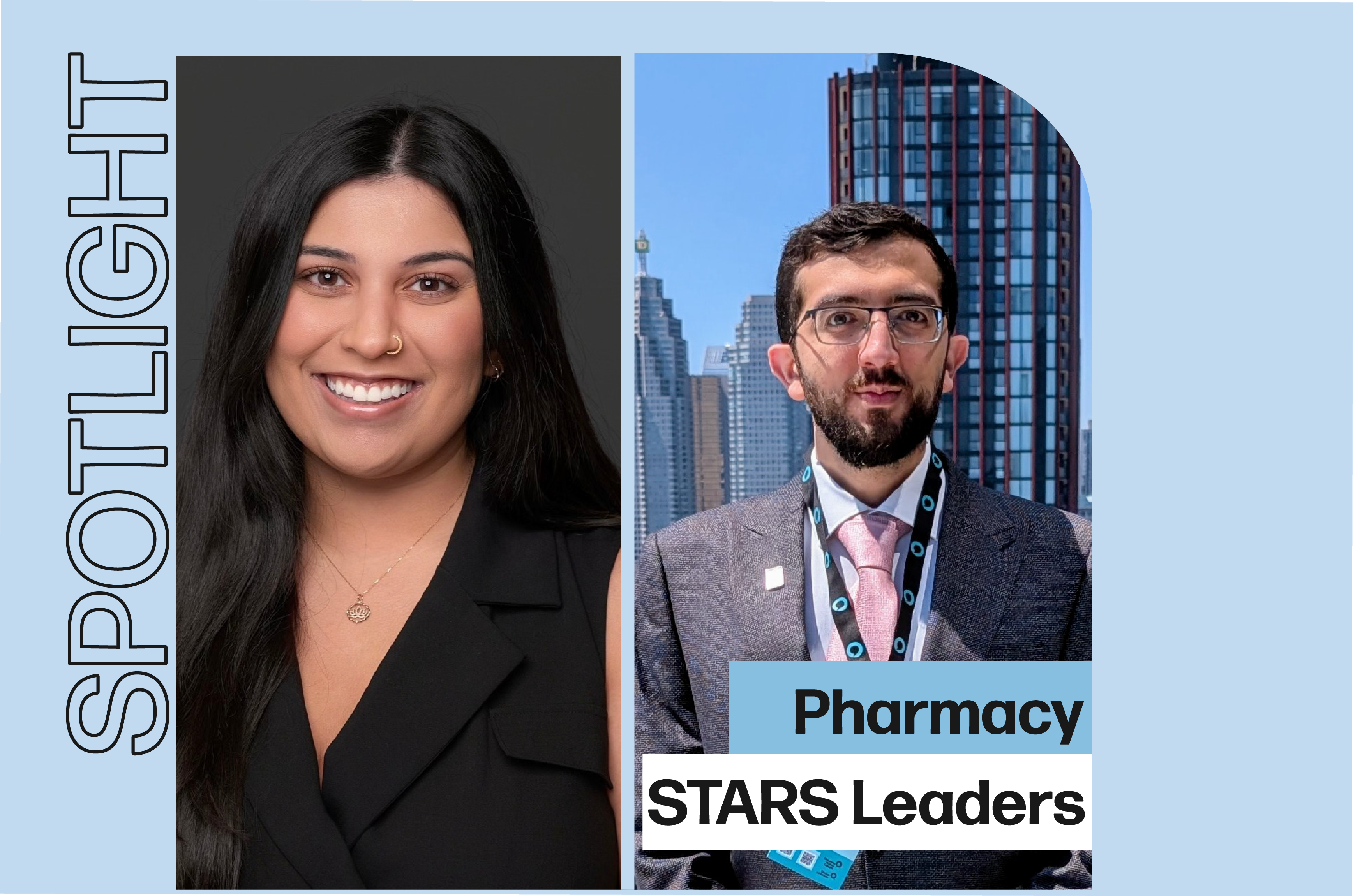
In 2015, the Students and Trainees Advocating for Resource Stewardship (STARS) program was launched in Canadian medical schools with the goal of inspiring the next generation to choose wisely. Ten years later, in 2025, that goal was expanded to include pharmacy programs. Fourth-year PharmD students at the University of Manitoba and the University of Alberta, Riddhi Tailor and Ammar Burhani, were among the first cohort of leaders to get involved. Their efforts throughout the 2025-26 academic year blazed a trail in their field and inspired their classmates to consider resource stewardship in their future pharmacological practice. In this inaugural year, they helped launch this new direction for the program and make resource stewardship a key topic on campus.
Being the first to attempt something is never simple, but Riddhi and Ammar took that challenge in stride. They were excited to forge their own paths and build the STARS Pharmacy program from the ground up with their own unique experience. “There wasn’t really a roadmap, so in that way, it was challenging but exciting, because it gave me creative freedom to develop initiatives that were meaningful to all of our classmates,” Riddhi explains.
Throughout the year, both leaders collaborated with Medicine STARS on their respective campuses. This helped them raise awareness of the Pharmacy STARS program and learn from past successful initiatives, but they also noticed key differences between their programs. Pharmacy programs are structured differently from their medicine counterparts, with smaller groups of students and more streamlined schedules. As a result, pharmacy students often spend more time with the same classmates and come to build close interpersonal relationships with their peers. Riddhi used this to her advantage and planned her two Lunch and Learn events during times when she knew most of her University of Manitoba classmates would be free. She also made sure to choose topics that were relevant to them, including antimicrobial resistance and alternatives to metered-dose inhalers.
“I wanted the Lunch and Learns to focus on topics that students were genuinely curious about,” she shares. “Because we’re a smaller program and spend a lot of time together, I had a good sense of what my classmates were interested in and I tried to choose topics that we had touched on in class, but didn’t necessarily get the opportunity to explore in depth.” This attention to detail and understanding of her peers, paired with the lure of free lunch, made these events a great success. Both sessions were full, with over 85 attendees per lunch.
Ammar’s initiatives at the University of Alberta, a medication disposal drive and awareness campaign, were similarly tailored to his interests. For him, the decision to join Pharmacy STARS was spontaneous and driven by passion for environmental sustainability; “My beliefs teach me to work to plant a tree even if I will not be there to watch that tree grow,” he shares. “STARS is a tree we are planting to help protect the environment and future generations.”
A program-wide medication disposal drive, coupled with a poster campaign about the dangers of improperly recycling medications and safe disposal methods sparked conversations about the environmental sustainability of prescription medications. “This drive was, one, about collecting medication, but really, that’s the small part,” Ammar explains. “The main goal was to inform people of what their options are and where they should dispose of it, so that they’re equipped for the future.” He estimates that he and his teammates spoke with 100 students over the course of the disposal drive.
After just one year, these pharmacy STARS have generated tremendous momentum, laying the groundwork for the program’s continued growth. They already have ideas for upcoming STARS pharmacy leaders, and hope that they can continue to create connections, and empower their peers to advocate for medication appropriateness and resource stewardship in practice.
“Pharmacists are in a unique position; we’re kind of right in the middle of patient care. We ensure that medications are indicated, effective, safe and are being used appropriately,” says Riddhi. “We can also educate patients on the importance of resource stewardship right at the point of contact with their medications.”